



Aug 07, 2026
ACSR Conductor Types and Designations: How to Read Code Names
ACSR conductors can be identified via nominal cross-sectional area, stranding configuration, type code, or a combination of the above. ACSR model designations are defined in accordance
with corresponding industry standards. When drafting inquiries or purchasing specifications, purchasers shall verify the conductor’s structure, dimensional data, mass, as well as all electrical and
 mechanical parameters, including applicable standards, resistance, rated tensile strength and service conditions.
This document elaborates mainstream ACSR types, standard designation formats and standardized datasheet reading methods
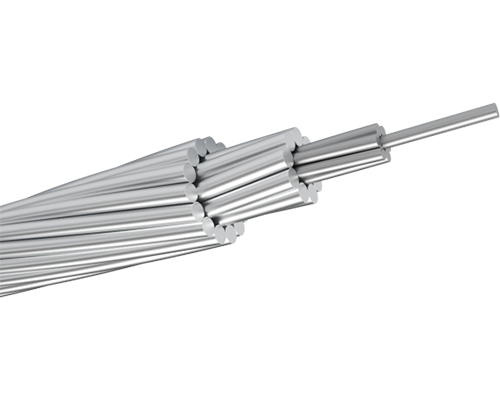
What Is an ACSR Conductor and How Is It Constructed?
Multiple layers of hard-drawn aluminum wires are concentrically stranded over a coated steel core (galvanized steel core as the mainstream option). The steel core can be a single solid wire or multi-stranded assembly, determined by the specified conductor construction, cross-section and mechanical load demands. Anti-corrosion grease can be coated on the core or intermediate layers to enhance anti-corrosion performance.As bare overhead conductors without insulating sheaths, ACSR products are widely applied to overhead power transmission and distribution lines. They integrate aluminum’s high conductivity and lightweight property with steel’s superior tensile strength; their outstanding tensile and sag characteristics make them suitable for long-span circuits and complex topographic environments.
What Do the Aluminum Strands and ACSR Core Do?
The outer aluminum strands of ACSR bear the majority of operating current. Aluminum delivers high conductivity, corrosion resistance, low density and ductility, yet its tensile strength is inferior to steel.The central steel core serves as mechanical reinforcement. The quantity and diameter of core strands determine the conductor’s rated tensile strength, total mass, sag characteristic and aluminum-to-steel cross-sectional ratio. Accordingly, two conductors with identical nominal cross-sections may deliver distinct mechanical properties.
The steel core shall never be defined as an independent conductor; it is an integral component of composite ACSR stranded wire. The full standard name is Aluminum Conductor Steel Reinforced (ACSR).
Is “ACSR Conductor Cable” the Correct Term?
Standard precise technical expressions are ACSR conductor and ACSR stranded conductor. Although “ACSR cable” is common in commercial scenarios, it is inaccurate for formal technical specifications, since “cable” usually refers to insulated wire while ACSR belongs to bare overhead conductors.Non-standard phrases such as ACSR aluminium conductor, reversed "conductor ACSR" and independent steel conductor must be revised to standardized terminology in all technical documents.
How Does an ACSR Designation Show Size and Stranding?
A complete purchase specification should identify the standard, nominal aluminum area or size, code word where applicable, aluminum/steel wire count, individual wire diameters, core material, corrosion-protection requirements, and required electrical and mechanical properties.A construction written as 26/7 generally means 26 aluminum wires around seven steel wires. A 6/1 construction means six aluminum wires around one steel core wire. These numbers describe strand count. Ampacity and rated tensile strength cannot be directly determined from these strand figures alone.
Applicable industry standards cover GB/T 1179, IEC 61089, ASTM B232, BS EN 50182, BS 215-2 and AS 3607. Identical conductor series may adopt different designations under disparate standards. Purchasers shall cross-check full parameter sheets before regarding two type codes as interchangeable.
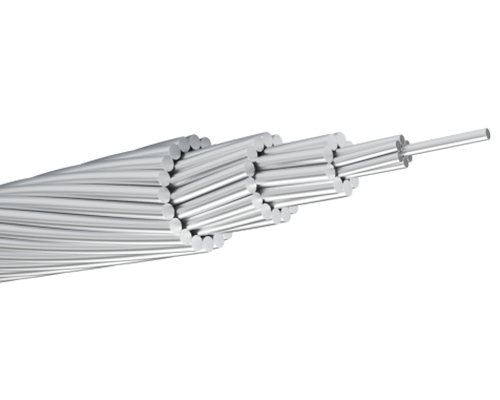
How Do ACSR Designations Differ Between Standards?
ACSR conductors can be manufactured according to standards such as GB/T 1179, IEC 61089, ASTM B232, BS EN 50182, BS 215-2, and AS 3607. Different standards may use different designation methods and technical requirements.For example, the Chinese designation may use JL/G1A, JL/G2A, or JL/G3A, in which L represents hard-drawn aluminum wire and G1A, G2A, or G3A identifies the steel wire grade.
Prior to order confirmation, purchasers shall verify the applicable standard, aluminum-steel matching scheme, strand quantity, single-wire diameter, overall outer diameter, mass per unit length, DC resistance, rated tensile strength, core coating and anti-corrosion specifications. All technical parameters must be validated before mass production, as model coding rules and product specifications differ across standards and regional markets.
What Is the Difference Between ACSR and ACSR/AW Conductor?
Standard ACSR uses a galvanized or otherwise specified coated-steel core. An ACSR/AW conductor uses aluminum-clad steel core wires. Aluminum wires are concentrically stranded around the core.ACSR/AW is used in bare overhead transmission and distribution. Its aluminum-clad steel core can improve corrosion resistance and change the conductor’s resistance, mass, dimensions, and rated strength. The extent of these differences depends on the specified construction and the grade core wire.Applicable standards include IEC 61089, ASTM B549, and GB/T 1179.
ACSR and ACSR/AW cannot be directly substituted for each other. Users must verify core material, rated tensile strength, dimensional tolerance and relevant test reports before replacement.
How Should You Read an ACSR Ampacity Data sheet?
Start with the standard and exact ACSR conductor type. Then check:· Aluminum, steel, and total metallic areas
· Number and diameter of aluminum and steel wires
· Overall diameter and mass per unit length
· Rated strength or minimum breaking load
· Maximum DC resistance at 20°C
· Core coating and grease requirements
· Ampacity
Ampacity is not determined by the type code alone. It changes with the conductor temperature limit, ambient temperature, wind, solar radiation, elevation, surface emissivity, and calculation method. Two data sheets may therefore show different current ratings for the same code word under different assumptions.
Rated tensile strength is a mechanical index, while ampacity represents thermal-electrical operating performance.
How Can Buyers Confirm the Correct ACSR Conductor Type?
Prior to placing orders, purchasers shall confirm the applicable standard, nominal cross-section, type code, stranding layout, single-wire diameter, core coating, grease coverage, DC resistance, rated tensile strength, mass per unit length, stranding lay direction, packaging scheme and full test records. Line designers also need to check design span, sag value, operating tension, wind load, ice coating, ambient temperature and corrosive environment.At TDDL Cable, we compare each customer designation with the required standard and complete conductor construction before confirming an order. We provide dimensional, electrical, and mechanical data for approval. We distinguish standard ACSR from ACSR/AW requirements. Our products have been supplied for overhead projects involving both conductor families.