



Aug 06, 2026
How to Choose XLPE-Insulated Power Cable for Your Project
What Project Conditions Define XLPE Cable Selection?
Selecting an XLPE-insulated power cable starts with solid project data. First, confirm the system voltage, grounding method, fault level, feeder setup, and accessory system. Only then compare products. Low-voltage, medium-voltage, and distribution uses differ. Insulation stress, sheath bonding, joints, and terminations change with network design. This matters most for an industrial advanced medium voltage XLPE-insulated power cable. Screening and accessory fit directly affect long-term reliability.Load study must cover steady current, cyclic loads, overloads, motor starts, and future growth. Conductor size needs checking against actual installation conditions. This keeps XLPE-insulated power cables inside thermal limits across the actual load profile. Route details also count. Ambient temperature, burial depth, grouping, soil thermal resistivity, airflow, moisture, chemicals, UV, vibration, and impact all change ampacity and construction requirements. These checks become critical when picking an XLPE-insulated power cable for urban power systems or harsh industrial routing environments.
Why Does XLPE Insulation Suit Power Distribution?
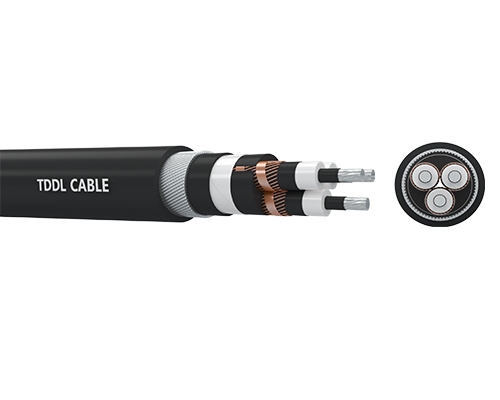
XLPE insulation delivers strong dielectric strength, low loss, and steady thermal performance. Under proper conditions, a high-thermal-stability XLPE-insulated power cable runs at higher conductor temperature than PVC types. Standard designs allow 90°C continuous conductor temperature and up to 250°C short-circuit temperature for five seconds or less, per the relevant standard and manufacturer data.These traits suit utility feeders, plants, substations, commercial sites, and infrastructure. Still, insulation alone does not set performance. Conductor type, shielding, sheath, armor, accessories, installation workmanship, and operating conditions must operate as an integrated system.
How to Select Conductor, Insulation, Sheath, and Armor
Conductor Material and Size
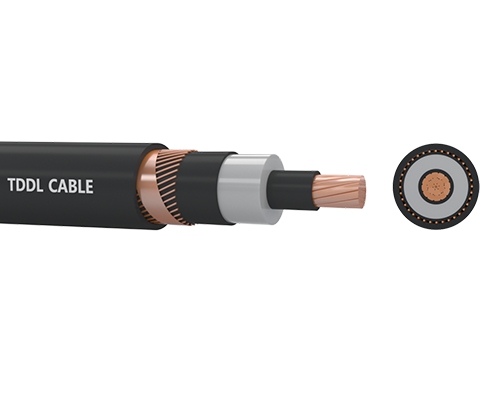
Designers shall compare copper and aluminum conductors in terms of electrical conductivity, unit weight, joint connection technique, minimum bending radius, maximum pulling tension and total installed cost. Aluminum conductors reduce overall weight and raw material expenditure for long-distance cable runs, while copper provides higher conductivity per unit cross-section and simplifies terminal connection processes. At TDDL Cable, we evaluate conductor selection based on the complete engineering and installation scheme rather than material price alone.The chosen cross-section must meet ampacity, voltage drop, short-circuit strength, and mechanical needs. Oversizing is not automatic. Heavily loaded or long feeders may still justify larger size when lower losses reduce life-cycle cost.
Insulation, Sheath, and Armor
Insulation thickness must match voltage class and standard. Quality checks cover dimensions, conductor resistance, voltage withstand, insulation integrity, and thermal expansion results. Medium-voltage designs may also need partial discharge test data and eccentricity data.Pick the outer sheath for fire rules and site exposure. PVC, PE, and LSZH sheaths suitable for different conditions. An electrical engineering XLPE-insulated PVC-sheathed power cable works where fire performance, moisture resistance, and cost balance. Armor helps when the route faces impact, burial risks, shafts, or other mechanical stress. Choose steel tape, steel wire, or no armor based on actual mechanical loads along routing paths.
Which Electrical Calculations Must Be Completed?
Ampacity
Catalog-rated ampacity serves only as a preliminary reference. The final allowable current capacity is determined by conductor operating temperature, installation method, ambient environment, multi-cable grouping, burial depth, soil thermal resistance, duct arrangement and ventilation performance. Designers shall adopt actual on-site parameters to calculate the rated ampacity of high-performance XLPE cables for utility and industrial feeder circuits.Voltage Drop and Short-Circuit Withstand
Voltage drop calculation requires input parameters including cable routing length, operating load current, load power factor, hot-state conductor resistance and motor starting transient current. Long-distance low-voltage cable runs are most likely to exceed permissible voltage drop limits. Short-circuit withstand capability shall match conductor cross-section, protective device settings, prospective fault current and fault clearing time. A cable that meets normal ampacity requirements may still fail to satisfy short-circuit withstand specifications.How Does Installation Method Affect Cable Choice?
Voltage drop calculation requires input parameters including cable routing length, operating load current, load power factor, hot-state conductor resistance and motor starting transient current. Long-distance low-voltage cable runs are most likely to exceed permissible voltage drop limits. Short-circuit withstand capability shall match conductor cross-section, protective device settings, prospective fault current and fault clearing time. A cable that meets normal ampacity requirements may still fail to satisfy short-circuit withstand specifications.Cable joints and terminations shall be compatible with cable voltage rating, conductor material, metallic screen structure, sealing requirements and on-site mechanical stress. For medium-voltage networks, the selection of matching accessories and installation workmanship are equally important as the cable itself. If the ambient installation temperature falls below 0°C, all preheating procedures specified by the manufacturer shall be strictly followed.
Can an Energy-Efficient XLPE-Cable Reduce Life-cycle Cost?
An energy-efficient XLPE-insulated power cable depends on conductor size, route length, yearly load factor, and operating temperature. When specifying an XLPE-insulated power cable for energy efficiency, compare procurement and installation expenditure against resistive losses, maintenance, and service life. High-use feeders may justify larger conductor size when loss savings exceed the extra upfront cost.Which Standards, Tests, and Documents Are Required?
Designers shall confirm compliance with applicable IEC, BS, ICEA, national, power utility and project-specific fire protection standards. The selected standard shall match the cable’s voltage rating, structural design and target application market; a collection of irrelevant standards cannot substitute the single governing specification for the project.Prior to cable acceptance, manufacturers shall provide routine test, sampling test and type test reports. Standard test contents cover conductor resistance, voltage withstand, insulation & sheath integrity, thermal expansion performance and construction drawings. For critical engineering projects, additional test data including flame retardancy, water penetration resistance, thermal aging and partial discharge shall be submitted. All datasheets, conformity declarations, test certificates, reel length records, packaging specifications and full traceability documents shall be consistent and cross-verified.
How Should Suppliers Be Evaluated?
A reliable supplier shows controlled production, test ability, traceability, document quality, realistic lead times, and proper export packing. At TDDL Cable, we compare conductor, insulation, sheath, armor, test evidence, and delivery plan against the project spec line by line. Price comparison comes only after technical scope is aligned.Common selection errors include choosing by price alone, using incomplete route or load data, ignoring future growth, and overlooking accessory compatibility. These mistakes can produce undersized conductors, wrong sheath materials, installation trouble, or poor fault performance.