



Jun 18, 2026
How Medium Voltage Cable Connectors Ensure Safety and Protection
How Medium Voltage Cable Connectors Enhance Electrical Safety
What Role Do Medium Voltage Cable Connectors Play in Electrical Systems?
Medium voltage cable connectors are critical components for safe, efficient power delivery. They establish dependable electrical continuity between medium-voltage cables and secure stable connections throughout complex power grids. Their firm mechanical clamping avoids accidental disconnection and minimizes arcing and electrical faults during load changes. Professionally designed medium-voltage connectors can preserve insulation performance even under fluctuating thermal and mechanical stress.The overall operational stability of distribution systems largely depends on connector performance, as consistent current transmission serves as the fundamental operating requirement of power distribution networks. Medium voltage distribution cables can be laid indoors, in tunnels, cable trenches, cable shafts or directly underground. Thanks to their wide application adaptability, high-performance connectors are essential for the safe operation of substations,power plants and industrial facilities.
How Do TDDL cable Connectors Contribute to System Reliability?
TDDL cable specializes in the design and manufacturing of medium voltage cable connectors that deliver stable performance under harsh operating environments. Our products can effectively suppress partial discharge and reduce dielectric loss, while maintaining excellent electrical contact at every cable joint for long-term service. Fitted with high-grade sealing structures and uniform contact pressure design, our connectors deliver stable operation for both indoor and outdoor applications.The upgraded structural design of our medium voltage cable connectors blocks moisture intrusion and mechanical abrasion, which are major triggers of premature product failure. With high-strength insulation systems and corrosion-resistant materials, all TDDL cable connectors can maintain stable medium voltage connections and adapt to various power grid layout schemes.
Key Design Elements That Promote Safety in Medium Voltage Cable Connectors
Premium insulating materials constitute the core of safety-oriented connector design. Cross-linked polyethylene (XLPE) used as insulation boasts outstanding resistance to voltage stress. It features excellent electrical and mechanical properties, including low dielectric loss and high insulation resistance.
Shielding structures enhance overall safety by mitigating electromagnetic interference and leakage current that may damage adjacent electrical circuits. Mechanical locking structures prevent connector loosening caused by vibration or load fluctuation, sustaining continuous protective performance throughout the entire service life of the equipment.
Why Are Insulation and Shielding Critical for Medium Voltage Cable Protection?
How Does Insulation Integrity Impact Medium Voltage Cable Performance?
Sound insulation acts as the primary defense against short circuits and flashover faults in medium voltage power networks. XLPE insulation features superior dielectric strength to withstand severe electrical stress. However, insulation aging or damage will trigger partial discharge and local overheating, gradually impairing the overall performance of power systems. Regular electrical performance tests ensure all indicators stay within safe thresholds, securing the stable operation of medium voltage cable systems.
What Is the Function of Shielding in Medium Voltage Cable Connectors?
Shielding structures undertake two key protective functions: safely diverting fault current to the ground and restraining electromagnetic interference that may interfere with control equipment and communication lines. Standardized grounding design guides leakage current away from precision components without causing damage. This controlled current discharge protects both personnel and equipment from hazards induced by unshielded or improperly grounded cable joints.
Materials Used for Insulation and Shielding in TDDL cable Systems
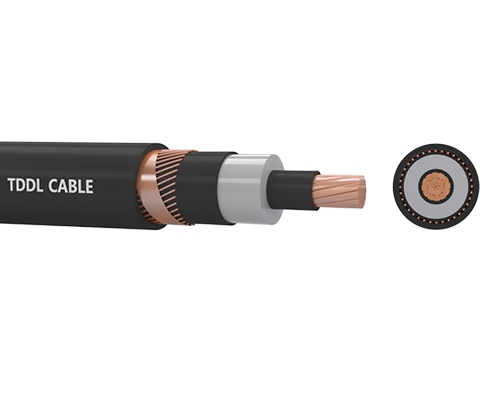
TDDL Cable selects cross-linked polyethylene (XLPE) as the core insulation material for its outstanding heat resistance and flexibility under variable load conditions. Our products adopt semi-conductive layers to evenly distribute electric fields on conductor surfaces and eliminate stress concentration points inside the insulation. Metallic copper tape is wrapped around insulated conductors to achieve continuous shielding and form reliable grounding channels for complete connector assemblies.The outer polyolefin sheath offers resistance to ultraviolet radiation, oil corrosion and mechanical abrasion. This outer protective layer guarantees long-term structural stability, especially for industrial scenarios with frequent mechanical friction.
.jpg)
How Do Installation Practices Affect Medium Voltage Cable Connector Safety?
Why Is Correct Installation Essential for Medium Voltage Cable Systems?
Wrong installation steps can harm safety. They raise risks such as overheating, arcing, or moisture entry at joints. Correct torque during assembly keeps stable mechanical contact and low electrical resistance at connection points. Following maker guidelines meets technical standards and lengthens the working life of each connector.How Should TDDL cable Connectors Be Installed for Maximum Protection?
Preparation Steps Before Installation
Before termination starts, cables need careful checks for damage or dirt on the outer sheath and conductor surfaces. Confirm that actual cable sizes match the stated connector ratings to prevent misalignment during compression.Connection and Sealing Procedures
We suggest calibrated compression tools made for our medium voltage covered connectors. These tools reach the right contact pressure without distorting conductive parts. Sealing kits then go on joints and terminations to block moisture entry. This step matters most for underground or tunnel installs where humidity shifts.Post-installation Testing and Verification
After assembly, run insulation resistance tests and partial discharge checks to verify dielectric performance at rated conditions. Logging these baseline results creates a reference for later maintenance reviews.What Maintenance Measures Keep Medium Voltage Cable Connectors Safe Over Time?
How Often Should Medium Voltage Cable Systems Be Inspected?
Routine checks should match operational load cycles and local site conditions such as temperature swings or contaminant exposure. Visual reviews catch early signs like corrosion spots, sheath cracks, or discoloration from heat. All these signs call for prompt fixes.Which Diagnostic Techniques Improve Connector Safety Monitoring?
Thermal Imaging Analysis
Thermal imaging spots unusual heat from poor connections or overloads before they grow into major failures.Partial Discharge Detection Methods
Regular partial discharge tests find early insulation wear inside connectors. This allows planned maintenance before a total breakdown happens.Electrical Resistance Measurement
Joint resistance checks confirm low-resistance continuity across all connected terminals and support efficient current flow through each part of a medium-voltage connection network.How Do Environmental Factors Influence Medium Voltage Cable Connector Durability?
What Environmental Conditions Pose Risks to Medium Voltage Cables?
Environmental exposure can speed up material wear if not handled well. High humidity drives corrosion inside metal interfaces. Large temperature swings create expansion and contraction cycles that fatigue joints. Chemical vapors or UV light age polymer sheaths faster on outdoor setups.They suit indoor, tunnel, cable trench, shaft, or buried laying. This range proves that proper material choice supports steady operation in varied conditions.