


Apr 17, 2026
How Medium Voltage Power Cables Support Urban Infrastructure Growth
How Do Medium Voltage Power Cables Contribute to Urban Infrastructure Growth?
The Role of Medium Voltage Power Cable Systems in City Development
Medium voltage power cables form the core of today's city energy setups. They deliver steady electricity across growing urban zones. These cables link high-voltage transmission lines to low-voltage systems that power homes, offices, and factories. Their structure aids crowded areas with firm and effective power flow. This is key for smooth city functions.Medium voltage cables for distribution networks. They are suitable for laying indoor, tunnel, cable trench, shaft or buried laying. The cable can withstand mechanical external forces and a certain tensile force. It is widely used in transformer stations, electric power plants and industrial plants.
This flexibility lets them go underground or inside buildings. Thus, they fit the tricky space limits of city settings.
Why Medium Voltage Power Cables Are Essential for Modern Infrastructure
Medium voltage power cables from TDDL cable guarantee steady energy to vital setups like hospitals, transport networks, and data centers. Reliability matters greatly there. Their improved insulation and conductor methods cut energy waste. At the same time, they boost safety in busy city spots.Good electrical and mechanical properties. Minimal dielectric loss, high insulation resistance.
These traits suit city uses that need lasting steadiness. Medium voltage cables adapt well. So, they work in underground tunnels or overhead setups based on site needs.
.jpg)
Application of Medium Voltage Power Cable in Commercial and Residential Buildings
Medium Voltage Power Cable for High-Rise and Mixed-Use Buildings
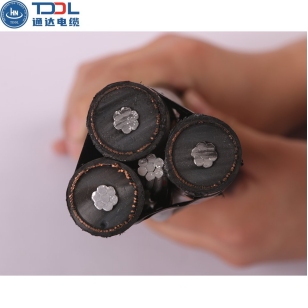
In tall buildings, medium voltage power cable setups spread electricity well across many levels. They support air conditioning units, lifts, lights, and backup lines. Their insulation layers boost safety in tight areas. Meanwhile, they keep top performance under big loads.Basic composition of power cable: Non-armored type: conductor + insulation (three-layer co-extrusion) + metal shield + sheath Armored type: conductor + insulation (three-layer co-extrusion) + metal shield + inner sheath + armor layer + outer sheath
This built-up design provides toughness. It also guards against electrical issues common in upright power lines.
Medium Voltage Power Cable in Smart Residential Communities
Smart housing areas count on medium voltage power cables. They link with smart grids and auto energy controls. These cables back green power like roof solar setups. Plus, they ensure solid supply for electric vehicle charging in home areas.Medium voltage power cables can be laid in various environments, safe and concealed, and not affected by external climate changes; they can be less maintained and durable (generally required to be more than 30 years).
Their extended lifespan cuts upkeep work. As a result, they aid green community growth. Medium voltage power systems play a big part here.
Industrial Applications of Medium Voltage Power Cable in Urban Areas
How Medium Voltage Power Cables Support Industrial Operations
Factory sites lean on medium voltage power cable networks a lot. They run big machines, auto lines, and control gear smoothly. These cables hold steady work by cutting voltage dips over long stretches in plant areas or business parks.They are suitable for laying indoor, tunnel, cables trench and underground. It is able to bear external mechanical forces.
Their strong build lets them handle tough factory settings. This includes heat and shakes from machines.
Benefits of Using Medium Voltage Power Cable in Industrial Zones
Medium voltage cables lift output through firm electrical work. They also lower stoppages thanks to their solid insulation setup.The PVC outer sheath allows adequate resistance to grease, oil and abrasion.
This quality supports long runs even near factory dirt or physical strain. Following global rules like IEC 60502-2 assures safety in nonstop heavy work.
The Role of Medium Voltage Power Cable in Transportation Infrastructure
Integration of Medium Voltage Power Cable in Metro and Railway Systems
City transport lines like subways use medium voltage power cables for train pull power and signal gear. Tough underground wires keep service going without breaks under heavy use.These cables are used for medium voltage public distribution from 6/10kV to 18/30kV.
Their magnetic shielding cuts noise in comms systems. This is vital for safe rail work. Medium voltage cables ensure smooth integration.
Use of Medium Voltage Power Cable in Airports and Ports
Airports rely on medium voltage cabling setups to power runway lamps, bag handlers, terminals, and security tasks well. Ports use them too for cranes, belts, and shipping gear. They run without stops.Supporting Renewable Energy Projects with Medium Voltage Power Cable
Connection Between Renewable Sources and Urban Grids Using Medium Voltage Cables
Medium voltage power cable options link green energy like solar fields or wind units to city stations well. They cut transfer waste over fair distances in town limits. At the same time, they keep system trust.Product features and main applications are applicable to 6-35kV medium voltage power transmission and distribution systems.
This fits them as key parts for adding spread-out power to local grids.
Advantages of Using Medium Voltage Power Cable in Sustainable Energy Systems
These cables aid grid steadiness during changing green output times. They back mixed setups with battery storage units. Their fit with new grid tech adds much to green city plans. These focus on cutting carbon output.Enhancing Data Centers and IT Infrastructure Through Medium Voltage Power Cable Solutions
The Importance of Medium Voltage Power Cable in Data Centers
Data centers need nonstop run time. So, medium voltage power cables give needed steadiness from stations to server rooms. They also back extra paths that stop blackouts in high-load times or fix periods. This ensures smooth digital work in cities.How Medium Voltage Power Cables Improve IT Infrastructure Efficiency
Better conductor plans help trim energy waste from stations to server shelves. They also allow step-by-step growth as tech needs rise in digital spots.High reliability Super high pressure Less maintenance
These qualities make them must-have parts for future IT setups. They stress output, toughness, and growth.