



Apr 23, 2026
Overhead Insulated Cable vs Bare Conductor: Key Performance Differences
What Are the Core Differences Between Overhead Insulated Cable and Bare Conductor?
Structural Composition of Overhead Insulated Cable vs Bare Conductor
Overhead power systems mainly use two types of conductors: overhead insulated cables and bare conductors. The main structural variation stems from the existence of insulation. The fundamental makeup of overhead insulated cables includes a conductor plus an insulation layer. Basic composition of overhead insulated cables. This shielding insulation coating stops direct exposure between the conductive core and outside factors like rain, dust, or plants.. Overhead insulated cable from TDDL cable means a cable for power transmission and distribution in power systems. Overhead conductors with insulation layers. Mostly single-core, but 2 to 4 insulated cores can also be twisted together into a bundle.On the other hand, bare conductors consist of exposed metal wires without any insulation sheath. They depend on air gaps for electrical separation between phases and from the ground. Since no insulating material exists, they weigh-less and prove easier to produce. Yet, they face greater risks from environmental harm and safety issues. The existence or lack of insulation strongly affects performance, safety, and upkeep needs.
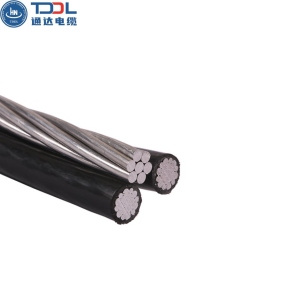
Electrical Performance Comparison of Overhead Insulated Cable vs Bare Conductor
From an electrical viewpoint, overhead insulated cables aim to cut down leakage current and boost dielectric strength via their insulating layer. Overhead insulated cables suit overhead power distribution lines of 46kV and below mainly. This feature makes them quite useful for medium- and low-voltage distribution setups where safety and dependability matter most.Bare conductors provide somewhat lower resistance. This happens because no insulating material limits current flow or adds capacitance effects. However, they tend to lose more energy from corona discharge or dirt buildup due to weather exposure. The choice between these two often hinges on voltage level, span length, and surroundings like moisture or dirt levels.
How Does Installation Differ Between Overhead Insulated Cable and Bare Conductor?
Before diving into the installation requirements, it’s important to highlight the company behind these high-quality cables.About TDDL cable
TDDL cable is a large-scale comprehensive cable enterprise established in 1987, specializing in the research, development, production, and sales of various power cables and conductors. Located in Henan Province, China, the company has over 30 years of industry experience and was successfully listed on the Shenzhen Stock Exchange in 2011. TDDL cable is one of the leading manufacturers in China’s cable industry.Installation Requirements for Overhead Insulated Cable
Overhead insulated cable setups need smaller phase-to-phase gaps. This is because the insulation stops unintended touches between lines. Their tight layout fits well in city spots with tight space or thick plant areas. In such places, regular bare conductors would create bigger dangers. Low Voltage Overhead Insulated Cables Mainly used in urban streets and green areas, overhead lines near buildings, and for power supply safety and operation management. They lower short-circuit chances from brushes with trees or close buildings. Plus, they ease setup in tricky spots.Installation Considerations for Bare Conductor Systems
Bare conductor setups call for larger phase spacing. This ensures enough air gaps under different weather. Such needs often lead to higher poles or broader land paths. These systems work best in countryside or open zones where space lacks limits. Engineers must handle tensioning carefully during setup. Otherwise, too much sagging could cause mechanical breakdowns or risky gaps..jpg)
What Are the Safety and Reliability Differences Between Overhead Insulated Cable and Bare Conductor?
Safety Aspects of Overhead Insulated Cable Systems
Safety stands out as a top benefit of overhead insulated cables. The insulation layer serves as a shield against electric shock risks from chance contact with live wires. It also boosts working safety in crowded areas where people or animals might near electrical setups. Moreover, the protective cover offers better defense against lightning faults or flashovers in storms.Reliability Factors in Bare Conductor Lines
Bare conductor systems count much on steady surroundings for solid performance. The metal surface lies open. As a result, it can quickly gather moisture, dust, or grime that harms conductivity as time passes. Corrosion poses a big issue in seaside areas from salt-filled air. Regular upkeep proves vital to fight these problems. Yet, with good care in stable weather, bare conductors can deliver lasting reliability at smaller starting costs.How Do Maintenance and Lifespan Compare Between Overhead Insulated Cable and Bare Conductor?
Maintenance Requirements for Overhead Insulated Cable Systems
Overhead insulated cable networks usually require less maintenance. This is because their outer layers guard against rust and dirt. This product has the characteristics of weather resistance, wear resistance, high mechanical strength and low line loss. New monitoring tools can spot issues fast via built-in sensors in cable systems. Thus, they cut downtime in upkeep tasks. Still, routine reviews stay important. They help gauge possible wear from sun rays or heat aging that might harm insulation strength over years.Maintenance Challenges in Bare Conductor Installations
Bare conductor lines require more frequent inspection. This stems from direct contact with outside contaminants like dust or factory fumes that hurt electrical flow. Routine cleaning aids in keeping efficiency. Corrosion controls, such as shielding paints, prove key in seaside setups. Wind-caused shakes may slowly wear connections or shift tension over lengths. So, regular tweaks remain crucial to keep mechanical steadiness during their service life.How Do Cost and Efficiency Vary Between Overhead Insulated Cable and Bare Conductor?
Cost Analysis of Using Overhead Insulated Cable vs Bare Conductor
The expense breakdown between these two systems varies greatly. Making overhead insulated cables adds extra stuff like cross-linked polyethylene (XLPE) insulation layers. This raises production steps and starting costs. For example: rated cable 10kV aluminum core light cross-linked polyethylene insulated overhead cable, Single core, nominal cross section is 95mm2. Even with this bigger initial outlay, running savings come from less upkeep and fewer breaks due to strong protection traits.In comparison, bare conductors show lower starting material costs. But they often face higher total expenses. This occurs because they need constant checks and fixes for rust control or mechanical work after bad weather.
Efficiency Considerations in Power Transmission Systems Using Overhead Insulated Cable vs Bare Conductor
For efficiency, overhead insulated cables help reduce energy losses caused by leakage currents and environmental contamination. Their dielectric layer splits conductive routes well. At the same time, bare conductors might give a bit better plain conductivity in perfect dry settings. But they see drops in output during heavy rains or thick dirt that raise surface leaks.Power companies often balance efficiency and safety in planning networks. City grids pick overhead insulated cables for their small size and public safety perks. Rural lines stick with bare conductors where cost advantages outweigh space and safety constraints.