



Oct 01, 2026
Overhead Insulated Cable: Reducing Tree Contact Risks in Power Distribution Lines
Tree contact is a recurring cause of faults on overhead distribution routes. An overhead insulated cable adds a durable XLPE covering around the conductor, reducing the chance that incidental branch contact becomes a phase-to-ground fault. It does not replace clearance rules or vegetation management, but it gives planners another practical way to improve reliability where corridors are narrow, wooded, or difficult to widen.
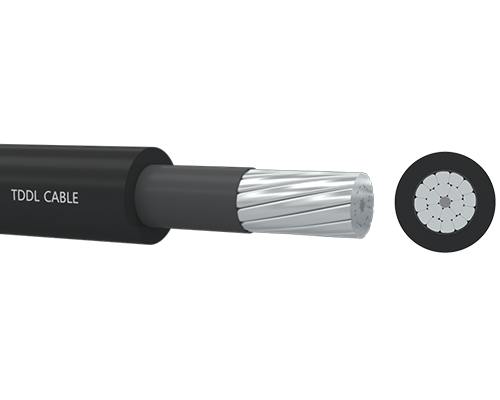
How does overhead insulated cable reduce tree contact risks?
A bare conductor depends on air clearance. When a wet branch bridges the conductor and a grounded tree, the resulting current can trip protection, damage hardware, or start a fire. An insulated overhead cable places an electrical barrier between the energized core and casual contact. In tree-prone areas, that barrier can reduce tree-related power outages caused by momentary brushing, while still requiring correct spacers, terminations, and protection coordination.What construction makes an insulated overhead cable suitable?
Our typical design uses a compact stranded aluminium conductor with XLPE insulation selected for network voltage, sunlight, moisture, and thermal duty. A messenger or neutral arrangement may be added where mechanical support or multi-conductor bundling is required. The conductor, screen, insulation thickness, and fittings must be specified as one system; a jacket alone does not make an arbitrary cable safe to touch.Where is overhead insulated cable in tree-prone areas most useful?
The strongest fit is medium-voltage distribution along forest edges, residential streets, coastal vegetation, and retrofit corridors where moving poles or widening the right-of-way is expensive. Low-voltage overhead insulated cable can also improve safety near service drops and dense streets. The design team should map span length, wind and ice, solar heating, allowable sag, and access for future inspection before selecting a construction method.How does it support vegetation management for power lines?
Insulation reduces the severity of some contacts, but it is not permission to stop pruning. A good program combines patrols, species-aware trimming, danger-tree removal, and inspection after storms. We recommend recording clearance, growth rate, and fault history by span so utilities can target work where it will reduce outages most.(1).jpg)
Overhead insulated cable vs bare conductor: which is better?
The answer depends on the line duty. Bare conductors dissipate heat directly to air and can be economical on open routes with generous clearances. ACSR bare conductor combines aluminium strands with a steel core for long spans and high mechanical loading. Overhead insulated cable can reduce contact risk and corridor width, but its thermal rating, accessory cost, and installation practice need closer control. It is a reliability and right-of-way decision, not a universal replacement.What changes between medium voltage and low voltage applications?
Medium voltage overhead insulated cable normally needs more robust insulation coordination, screened or bonded arrangements, and accessories rated for switching and fault stress. Low voltage overhead insulated cable is often selected for compact bundled routes, service connections, and crowded streets where accidental contact is the main concern. In both cases, the finished assembly must account for conductor temperature, neutral loading, lightning exposure, and the mechanical loads transferred to poles and clamps.How should tree contact with power lines be assessed?
Inspectors should record whether branches touch the covering, whether bark or sap has damaged the surface, and whether wind movement can pull the cable against a trunk or crossarm. A clean visual condition is not enough after a storm: look for tracking marks, sheath cuts, displaced spacers, and loose connectors. These observations help distinguish a vegetation issue from an accessory or installation issue and make future patrols more consistent.What should engineers check before specifying the cable?
Start with continuous load, short-circuit duty, system voltage, span, sag-tension, wind and ice, UV exposure, and expected tree contact. Confirm the XLPE temperature rating and ampacity under the actual bundle arrangement. Specify compatible piercing connectors, dead-ends, spacers, and terminations, then require routine and type-test evidence. At TD Cable, our team can coordinate conductor size, insulation construction, and installation guidance. See our overhead cable solutions, bare conductor products, and technical support.(1).jpg)
How can utilities reduce tree-related power outages over time?
Use a layered plan: select insulated overhead cable where contact exposure is high, maintain legal clearances, inspect connectors for tracking or water ingress, and review protection settings after reconductoring. During procurement, ask for traceable conductor materials, dimensional checks, electrical tests, UV performance, and clear field procedures. This combination improves reliability without treating insulation as a substitute for disciplined line maintenance.Project records should also define acceptance checks before energization. Confirm phase identification, connector torque, messenger tension, sheath continuity where applicable, and the manufacturer's minimum bending radius. Keep a spare-parts list for piercing connectors and terminations so storm repairs do not introduce mismatched components. When a route is upgraded, compare interruption minutes and vegetation work orders before and after installation; the results provide a practical basis for deciding where the next insulated section will deliver the most value.