



Oct 15, 2026
Low Voltage Control Cable vs Power Cable: Key Differences, Uses, and How to Choose
A control cable sends commands, status signals, and interlocking details. A power cable delivers the electrical energy that runs equipment. This difference affects conductor size, core count, shielding, insulation, routing, and testing. Selecting cables by voltage alone may cause noise, heat, or reliability issues. This guide covers low-voltage control cable construction, common control cable uses, the decision between control cable and power cable, and a practical selection method for industrial and infrastructure projects.
What Is a Low Voltage Control Cable and What Does It Do?
What Are LV Control Cables?
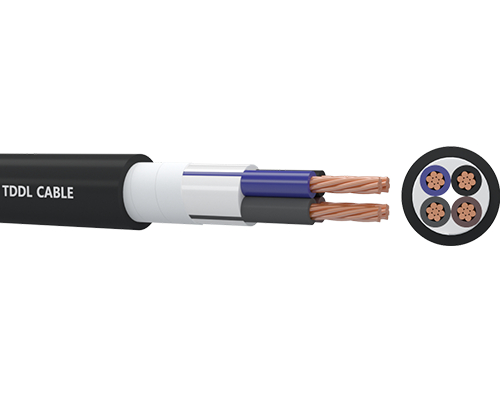
LV control cables are multicore cables used for installations of low-voltage control, monitoring, protection, and automation. These cables connect devices such as push buttons, relays, contactors, limit switches, sensors, actuators, control systems, and other protective systems. The conductors normally carry modest current. The goal is to share a condition or command rather than supply the main operating load.What Is Control Cable Used For?
Typical control cable uses include motor start and stop circuits, emergency shutdown loops, alarm and indication circuits, switchgear interlocks, substation protection, process automation, and building management controls. Flexible control wire may suit cases where equipment moves, or panels are densely wired. Fixed multicore cable is common between field devices, marshaling cabinets, and control rooms. The circuit voltage, signal type, and installation environment still set the exact construction.Control Cable vs Power Cable: What Are the Key Differences?
The simplest rule is that power cables deliver energy while control cables mainly direct how equipment operates. Yet a project specification must go further. A low-voltage power cable may be rated 0.6/1 kV. Some protection and control multicore cables can also be specified at 0.6/1 kV. Equal voltage markings do not make the cables interchangeable. Conductor area, number of cores, shielding, circuit duty, and applicable standard remain decisive.| Factor | Control cable | Power cable | Selection check |
| Primary duty | Commands, monitoring, protection, signals | Electrical energy delivery | Identify circuit function |
| Conductors | Many smaller cores are common | Fewer, larger current-carrying cores | Check size and core schedule |
| Shielding | Often used for noise-sensitive circuits | Construction depends on voltage and system | Review EMC and grounding |
| Routing | Separated from noisy power paths as required | Sized and routed for load and heat | Apply standard and site rules |
Control Cable Function, Current, and Voltage Rating
A control wire carries low-power commands or indications. It is sized for circuit current, permissible voltage drop, and reliable device operation. A power conductor is sized mainly for load current, short-circuit duty, voltage drop, installation method, grouping, and ambient temperature. Power cables therefore tend to use larger cross-sectional areas. A control cable often combines many smaller conductors in one sheath.Control Cable Cores, Shielding, and Routing
Control circuits may require numerous identified cores. Project records include examples of 7-, 9-, 16-, 19-, and 27-core control constructions with 2.5 mm2 conductors. This shows why core planning matters. Shielding may be added where electromagnetic interference could corrupt sensitive signals. Power circuits focus on phase, neutral, and protective conductors. They need separation from signal circuits. Even a shielded control cable should be routed and terminated according to the project's EMC design.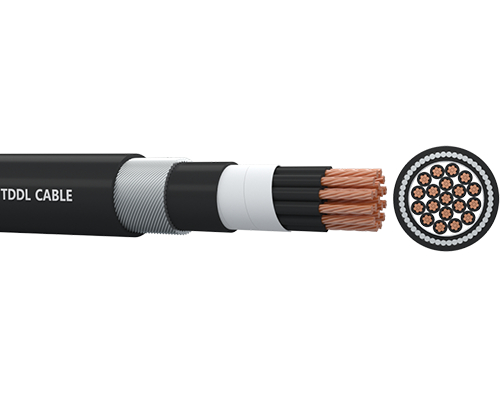
Which Insulation and Construction Fit the Application?
XLPE Control Cable for Thermal and Electrical Performance
An XLPE control cable uses cross-linked polyethylene insulation. This choice is made when thermal performance, electrical properties, or project specifications favor XLPE. Cable construction can include the conductor, insulation, fillers or wrapping, shielding, inner sheath, armour, and outer sheath. Armour is considered where mechanical protection is required. It does not replace correct supports, glands, bend radius, or a suitable outer sheath.PVC Insulated Control Cable for General Fixed Wiring
A PVC insulated control cable is widely used for general low-voltage duties because PVC can provide practical insulation and sheathing performance. Where smoke, halogen, flame spread, oil, sunlight, moisture, or chemical exposure matters, the material specification must address that condition directly. Low-smoke halogen-free or flame-retardant requirements should be treated as defined performance classes, not assumed from the cable's voltage rating.At TD Cable, we review the conductor, insulation, sheath, shielding, armour, core identification, and marking as one system. During production, wire drawing and stranding are followed by insulation extrusion and, as required, cabling, shielding, inner sheath, armour, and outer sheath. Insulation is cooled before spark testing, and each process stage is inspected before the cable moves forward. Explore our control cable range for available constructions.
Where Are LV Control Cables Commonly Used?
LV Control Cables in Automation and Control Panels
Factories use LV control cables between programmable controllers, motor control centers, sensors, valves, and field junction boxes. Buildings use them for pumps, fans, fire-related interfaces, access systems, and plant controls. In both settings, designers must distinguish discrete control, analog measurement, data communication, and power feeds. Each circuit has different noise sensitivity and separation needs.Low Voltage Control Cable in Substations and Infrastructure
Substations, rail systems, renewable-energy plants, and utility projects use multicore cables for protection, status, trip, and interlocking circuits. Our project experience includes protection and control multicore cable specified at 0.6/1kV, as well as control cable supplied alongside medium-voltage equipment. These examples show that control wiring is part of a coordinated system. Voltage class, core schedule, terminal plan, fire performance, and mechanical protection must align with the site design. Related low voltage cable constructions can be reviewed separately from control circuits.How Should You Match the Cable to the Project?
Control Cable Voltage, Conductor Size, and Core Count
Start with the schematic and cable schedule. Confirm the rated voltage, circuit current, allowable voltage drop, conductor material, conductor class, cross-sectional area, and number of active and spare cores. Then check short-circuit or fault requirements where relevant. Do not select a larger core count without confirming overall diameter, gland capacity, bend radius, pulling tension, and termination space.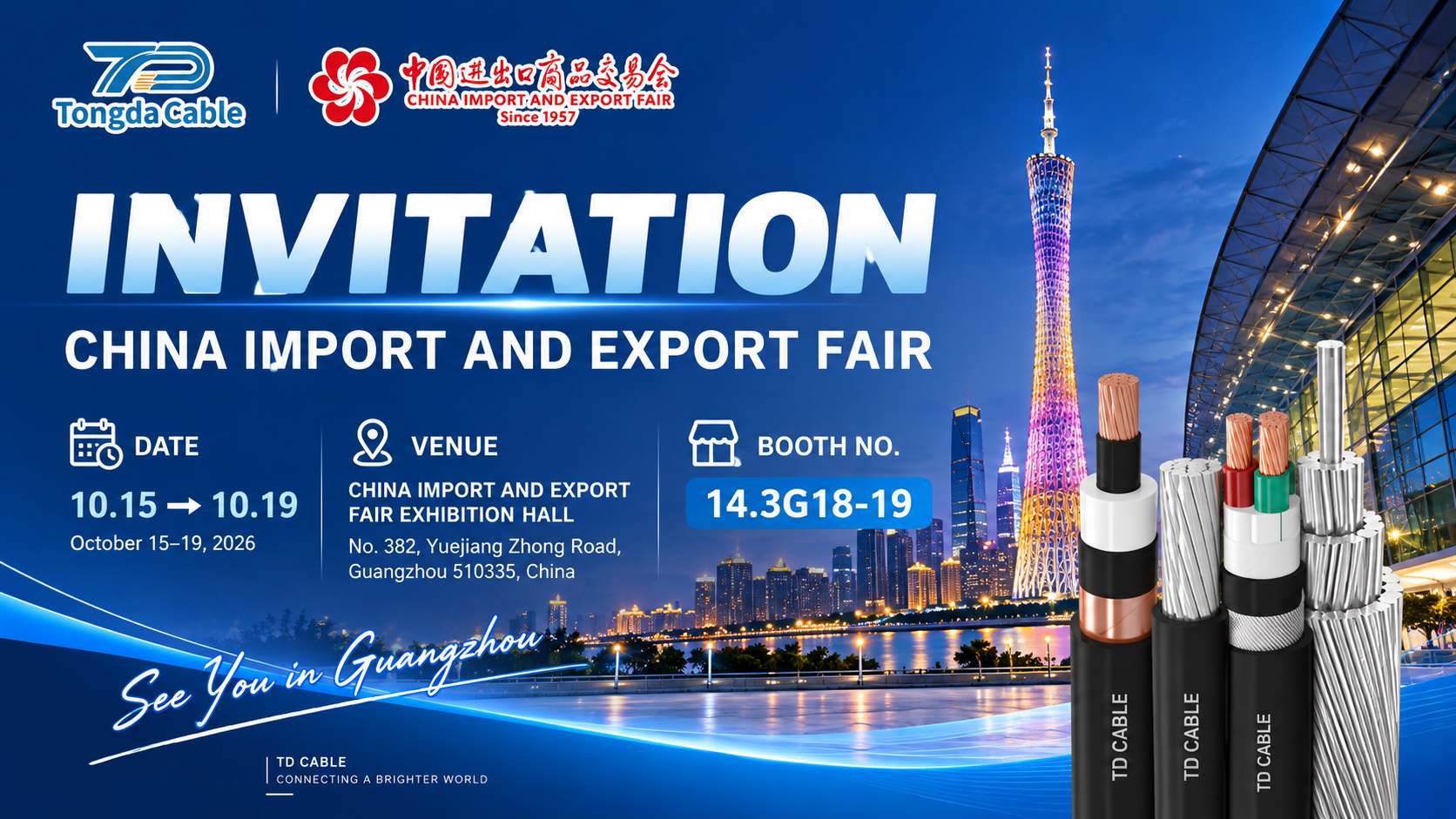
Control Cable Environment, Installation, and Compliance
Next, define indoor or outdoor use, fixed or flexible service, temperature, water, UV, oil, chemicals, fire behavior, mechanical risk, and EMC exposure. Match the insulation, sheath, shielding, and armour to those conditions and to the governing project standard. Verify core identification, meter marking, test documentation, and packing requirements before release. For a specification review, contact our technical team. We can compare the cable schedule with the intended duty rather than relying on a generic product name.Beyond technical specifications, communication with cable manufacturers also plays an important role in project planning. TD Cable will participate in the 2026 China Import and Export Fair in Guangzhou from October 15 to 19, at Booth 14.3G18–19. The event brings together international suppliers and buyers across various industries, including electrical equipment and power infrastructure.