



Jan 08, 2026
Why RHZ1 Is Popular for Medium Voltage Networks: Safety, Performance, and Compliance
With growing demand for reliable and sustainable electricity infrastructure worldwide, MV cables play a bigger role in distributing power. They link high-voltage lines to the low-voltage that reaches homes and businesses. You'll find them essential in urban networks, industrial sites, and solar or wind farms. Out of all the options available, RHZ1 really shines. It's a halogen-free type insulated with XLPE. It's designed for voltages between 6/10 kV and 18/30 kV. Engineers choose it because it's safe, tough, and complies with international rules. It's often the go-to choice for jobs where human safety and network uptime are critical.
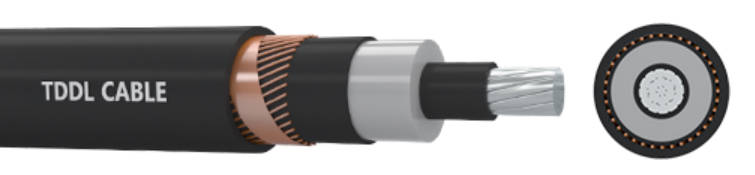
Components of RHZ1 Cables
These cables consist of multiple layers. Each one plays a role in delivering reliable electricity and solid durability.- Conductor: RHZ1 cables usually have class 2 stranded aluminum or copper conductors. Aluminum is popular because it's cheaper. Copper gets selected for superior conductivity.
- Insulation: The insulation uses cross-linked polyethylene (XLPE). It provides excellent electrical insulation and good heat tolerance.
- Screening:
* The metallic screen often uses copper tape or wires. This manages short-circuit currents and minimizes EMI.
- Outer Sheath: The sheath uses a halogen-free, low smoke zero halogen (LSZH) polyolefin material. It's flame-retardant and won't produce harmful gases in a fire. Usually, it's red to make it visible and comply with regulations.
- Optional Features:
* Better fire options like RHZ1-S (flame retardant) and RHZ1-AS (non-fire propagating) are perfect for locations with strict fire requirements.
Medium voltage cables for distribution networks. They are suitable for laying Indoor, tunnel, cable trench, shaft or buried laying. The cable can withstand mechanical external forces and a certain tensile force, it widely used in transformer stations, electric power plants and industrial plants.
Key Features and Advantages of RHZ1 Cables
Enhanced Safety Features
One big plus for RHZ1 is its safety features.- Halogen-Free Construction (LSZH): The outer sheath uses low smoke zero halogen material. In case of fire, it doesn't give off poisonous or corrosive smoke. That greatly reduces dangers in confined or busy areas.
- Flame-Retardant and Non-Fire Propagating: Types like RHZ1-AS follow strict fire tests such as UNE-EN 60332. They don't spread flames and produce very little smoke. That improves visibility during evacuation and safeguards gear.
- Ideal for Sensitive Installations: Thanks to this, RHZ1 is ideal for public buildings, transport tunnels, factories, and data centers where protecting lives is top priority.
Superior Performance Characteristics
On the performance side, RHZ1 delivers reliably in different conditions.- Thermal Resistance: XLPE insulation allows continuous operation at 90°C. And it can tolerate 250°C during shorts.
- Excellent Electrical Properties: Dielectric losses are low, and insulation resistance is high. It remains stable with varying loads and minimizes power loss.
- Mechanical Durability: Made to last, it stands up to sunlight and abrasion. Bending radius is just 15 times its diameter.
- Versatile Installation Options: You can install it inside, outside, in ducts, or underground. They are suitable for laying indoor, tunnel, cables trench and underground, it is able to bear external mechanical forces, making them ideal for both civil infrastructure and harsh industrial environments.
Regulatory Compliance and Standards
Compliance with international standards opens doors in regulated areas.- Standards Met: RHZ1 follows IEC 60502-2 and UNE-HD 620 standards. These cover MV cable design from 6 kV to 30 kV. IEC 60502-2 Power Cables with Extruded Insulation and Their Accessories for Rated Voltages from 1kV(Um=1.2kV) up to 30kV(Um=36kV) - Part 2: Cables for Rated Voltages of 6kV(Um=7.2kV) and 30kV(Um=36kV)
- CPR Classification: Advanced variants like RHZ1-AS achieve high CPR ratings like Cca-s1b,d2,a1. That's required for many EU public works.
- Eco-Friendly Compliance: On top of no halogens, they emit few corrosive fumes when burning. This supports environmentally friendly construction standards.
- Additional Protections: You can get versions resistant to rodents and termites. Water barriers adapt to site conditions.
Choosing the Right RHZ1 Cable Variant
The right RHZ1 variant hinges on your specific application.Voltage Rating:
- Choose according to the voltage required. Common ones are 6/10 kV, 12/20 kV, and 18/30 kV.
- These cables are used for medium voltage public distribution from 6/10kV to 18/30kV.
- Aluminum keeps costs down.
- Copper offers superior conduction and more flexibility.
- Go with RHZ1-S for standard flame retardance.
- Opt for RHZ1-AS if you need better fire containment.
- For damp locations, select RHZ1-OL or -2OL.
- Choose UV-protected versions for outside.
- Suitable for indoor ducts, tunnels, or direct burial depending on the outer sheath type and armor configuration.
- The cable can withstand mechanical external forces and a certain tensile force, ideal for rugged applications.
- Ensure it satisfies regional fire ratings or sector standards (like transport or renewables).
Conclusion
RHZ1 cable certifications represent a step forward in MV cable technology. It combines excellent safety, performance, and adherence to regulations. Good electrical and mechanical properties. Minimal dielectric loss, high insulation resistance. Its LSZH design, XLPE insulation, and add-ons ensure reliability in areas such as industrial controls, renewables, infrastructure, and urban developments.With grids becoming more intelligent and secure, RHZ1 from TDDL cable supports lasting dependability while complying with tough international standards. When designing or upgrading MV networks, pick variants that fit the environment and requirements to maintain high safety and efficiency long-term.