



Nov 05, 2026
Control Cable Replacement Guide: How to Match the Right Specifications
A broken control cable can bring down a production line. Ordering another cable with the same number of cores is not always a sensible option. The suitability of a replacement depends upon its voltage rating, conductor size, insulation and routing. Always measure up the old cable before asking for a quote to match with what's needed at site.
What Should You Check Before Replacing an Industrial Control Cable?
Start with the cable schedule, electrical drawings and an inspection of the safely isolated circuit. Record details before removing the old run.How Can You Confirm the Original Cable's Voltage Rating and Markings?
Check the rankings and standard out of power. Look at the original purchase spec and panel drawings if the print has worn away. The voltage class and not the conductor or shielding size is represented by a 0.6/1 kV rating (k-V because it refers to Kilovolt). They are used as control, monitoring and protection circuits in fixed installation of this rating.How Do You Verify Core Count and Conductor Size?
Check the number of insulated conductors and verify that cross-sectional area in mm² 12 × 1.5 mm² = twelve cores, each with a cross-sectional area of 1.5 mm. It does not define the outer diameter of cable. Copper conductor class: Make sure to check both types as they have different termination requirements. Identify the cores before unplugging anything.How Should You Measure Cable Length and Check the Route?
Record against trays, conduits and cabinet entries instead of straight between two panels. The answer needed to create vertical sections and also termination lengths. Available space and the minimum bend radius specified for a new design,check gland sizes. Take care of the cause of damage (abrasion, crushing) before pulling in a new sheath!Which Control Cable Construction Matches the Installation?
The correct cable construction depends on the circuit and its surroundings. Insulation, screens and armour address different requirements.When Should You Choose PVC or XLPE Insulation?
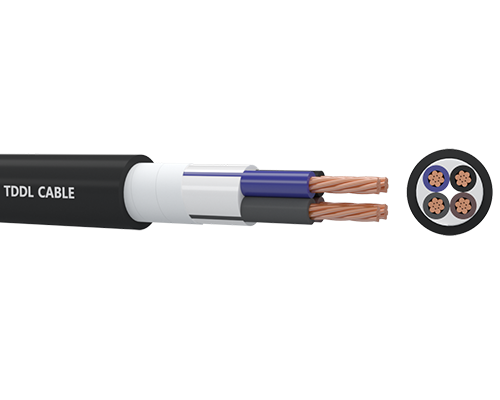
PVC insulated control cable is ideal for a variety of fixed installations. XLPE may also be suitable where the design has a higher nominal operating temperature than is allowed or cables function on complete cable rating prior to October 2023. For instance, NYY (KVV) has PVC insulation and a PVC sheath; but N2XBY (KYJV22)cable have XLPE insulation with PVC sheathe. Our primary Change Guide is to check the temp and cable specifications of this project before making material changes.
Is Shielded Control Cable Necessary for Signal Protection?
In close proximity to variable-speed drives, switching equipment or other sources of electromagnetic interference a shielded control cable may be required. A metallic screen that is properly terminated will reduces unwanted coupling into susceptible circuits. As an example, NYSY (KVVP2) sandwiches copper tape shielding in between its PVC-insulated cores and flexible PVC outer sheath. Screening, still has to be suitably grounded and considered in the separation from power circuits.Does the Cable Need Armour or Additional Mechanical Protection?
Armour protects against certain types of mechanical hazards, while shielding is designed to manage particular kinds electrical interference. For example N2XBY (KYJV22) includes galvanised steel tape armour under its outer PVC sheath. Imagine an armored control cable where you hope the installation will be exposed to external mechanical stress but check if such risks and routing conditions exist. Steel tape armoring, however, does not qualify your cable for every pulling or bending application.| Cable construction | Main selection concern |
| PVC or XLPE insulation | Thermal and electrical requirements |
| Copper tape shield | Interference and grounding arrangements |
| Steel tape armour | Exposure to mechanical damage |
How Can You Verify a Replacement Control Cable Before Ordering?
Turn the inspection into a specification the supplier and project engineer can review together.Which Specifications Should Be Included in a Control Cable RFQ?
A control cable RFQ should provide more than a general description. Include:1. Electrical details: rated voltage, core count, conductor material and area, conductor class, and applicable standard.
2. Construction: insulation, sheath, screen or armour requirements, plus fixed-installation conditions.
3. Order details: measured route length, quantity, destination and any termination constraints.
Clear control cable specifications allow a control cable manufacturer to assess the configuration without guessing missing parameters.
How Can You Confirm That the Replacement Cable Is Suitable?
Compare the proposed cable against the original circuit requirements before approval.| Item | Existing circuit | Proposed replacement |
| Rated voltage | Required voltage class | Meets specified rating |
| Cores and size | Wiring schedule | Matches approved design |
| Outer diameter | Glands and cable route | Fits installation space |
| Protection | Screen or armour needs | Meets site conditions |
How Can TD Cable Support Industrial Control Cable Procurement?
We produce 0.6/1 kV rated cable design for fixed control, monitoring and protection circuits at TD Cable. We manufacture NYY (KVV) insulated in PVC, NYSY (Kvvp2) sheathed with copper tape shielding and N2XBY(KYJV22),with XLPE insulation as well as galvanized steel tape armour. NYY (KVV) with PVC insulation, NYSY (KVVP2) bundled copper tape shielding and N2XBY (KYJV22), XLPE insulated, galvanized steel-tape armor cable.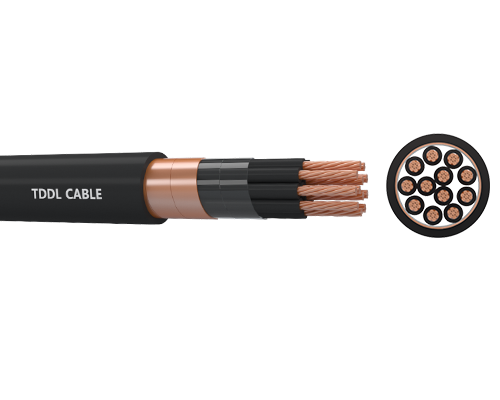
For example, we may work with specifications like IEC 60228 and IEC 60502-1. Please send us the ordering quantity, cable type, technical information and installation conditions of existing cables. We can assist in reviewing the different available constructions and create a quote for your particular project. We are able to go through the constructions that make sense for you and can sketch out a quote based on your project.