
Dec 11, 2025

UNE HD 620 S3 Standard Explained: Structure, Testing Requirements, and MV Cable Compliance

Share:
UNE HD 620 S3.JPG
Medium voltage cables rarely get much attention, yet anyone who has worked around substations, buried feeders, or wind farm trenches knows how quickly a quiet afternoon can turn noisy when an MV line fails. The UNE HD 620 S3 standard was created partly to avoid those situations. It describes how MV cables should be built and what they must endure before ending up underground or inside a duct for the next couple of decades. Manufacturers like TDDL cable also reference this framework when designing MV products for long-term field reliability.
What follows is a practical walk-through of this standard: what it covers, why certain rules exist, and how the testing process usually plays out in real projects. The goal isn’t to sound perfect, just to reflect the way engineers talk about these things in day-to-day work.

1. What UNE HD 620 S3 Covers

UNE HD 620 S3 is a harmonized European standard for medium-voltage cables ranging roughly from 3.6/6 kV to 18/30 kV. Instead of specifying fixed model names, it sets out how a compliant MV cable should behave mechanically, electrically, and environmentally.
Utilities across Europe rely on it, and so do many regions outside Europe that prefer familiar engineering rules. A cable purchased from two different suppliers should perform more or less the same when the standard is followed. At least, that’s the idea behind harmonization.
One small reminder: this standard doesn’t define commercial cable codes. Manufacturers use their own names. The important part is whether the structure and test results align with the rules.

2. Required Cable Structure

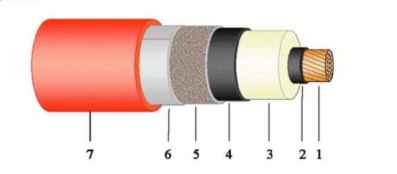
Most MV cables built to this standard share a set of structural elements. Anyone who has sliced open a failed MV cable in the field knows each layer is there because, somewhere in the past, skipping it caused hard lessons.

2.1 Conductors

UNE HD 620 S3 accepts both aluminum and copper. Aluminum, usually Class 2 compacted round, dominates for cost and weight reasons. Copper is chosen for specific load or installation conditions. The conductor must meet strict resistance and dimensional tolerances, because a small deviation can throw off current rating or heat buildup.

2.2 Three-Layer XLPE Insulation System

This system includes a semiconducting conductor screen, XLPE insulation, and a semiconducting insulation screen. These layers are often bonded. The purpose is to keep partial discharge low and reduce aging issues like electrical treeing. Older cables installed before the early 2000s often failed prematurely because their insulation systems weren’t as stable as modern bonded XLPE.

2.3 Metallic Screening

Each insulated core needs a metallic screen, usually copper tape or copper wires. Its job is simple: give fault currents a predictable path and provide stable earthing. Anyone who has analyzed a 20 kV system fault knows why consistent screen resistance matters.

2.4 Bedding and Outer Sheath

PVC and PE are the usual outer sheath materials. PVC shows up so often because it handles oils, grease, and everyday rough handling reasonably well. PE performs better in wet or buried situations. Regardless of material, the sheath must pass impact, abrasion, chemical, and in some cases UV resistance tests. Digging up an old feeder and finding the PVC sheath still looking decent isn’t uncommon and speaks to its durability.

2.5 Optional Armoring

Some installations need more mechanical toughness than a simple sheath can provide. Aluminum wire armor or steel tape armor can be added depending on the environment. Rocky soil, rodent activity, or frequent construction work nearby often push engineers toward armored designs even if the drawings don’t explicitly require it.

3. Electrical and Mechanical Performance Requirements

These performance expectations directly influence how long an MV circuit stays healthy.

3.1 Electrical Performance

Cables must demonstrate strong insulation resistance, low dielectric loss, good thermal stability under normal load, and controlled partial discharge levels. These aren’t just numbers on a datasheet. On long feeders, dielectric behavior affects everything from temperature rise to system losses during summer peaks.

3.2 Mechanical Performance

UNE HD 620 S3 expects cables to handle pulling, bending, impacts, and temperature swings. Ideally, installation conditions follow the manual perfectly, but reality often involves dragging a drum across uneven ground or pulling around a tight corner. The mechanical rules offer some buffer for those not-so-ideal days in the field.

4. Environmental and Fire Requirements

MV cables operate in tough places: wet tunnels, dusty factories, underground ducts with standing water. The standard requires resistance to moisture, oils, common chemicals, UV exposure (for outdoor cases), and temperature changes. Fire behavior also matters. Flame spread, smoke levels, and burning characteristics must meet defined thresholds, especially when cables run through public infrastructure.

5. Where These Cables Are Used

UNE HD 620 S3 cables appear in a wide range of installations.

5.1 Distribution Networks

Urban feeders, rural take-offs, and substation links rely on stable MV circuits. Failures here aren’t just technical issues; they often become urgent maintenance missions in the middle of the night.

5.2 Renewable Energy

Wind and solar farms bury MV collectors that aren’t touched again for twenty years unless something goes wrong. Stable insulation, predictable thermal performance, and low partial discharge behavior are essential.

5.3 Infrastructure and Industry

Rail tunnels, wastewater facilities, airports, and heavy industrial plants all use standardized MV cables because unplanned outages are expensive and disruptive. A harmonized standard keeps procurement and approvals straightforward.

6. How Compliance Works

Manufacturers must go through a mix of type tests, routine tests, and sample tests, and companies like TDDL cable typically keep long-term records to monitor whether materials or processes drift over the years.

6.1 Type Tests

These are carried out once for each design. They include dielectric tests, heating cycles, partial discharge checks, impact and pressure tests, aging simulations, water penetration tests, and flame tests. A failed type test often means adjusting materials or design.

6.2 Routine Tests

Performed on every production length. They cover conductor resistance, insulation thickness, sheath spark tests, and dimensional checks. Routine tests catch gradual drift in production before it becomes a field issue.

6.3 Sample Tests

Periodic checks—tensile strength, elongation, thermal aging—help confirm that materials stay consistent. These results often end up in quality logs that engineers revisit when something unusual is reported from the field.

7. Why This Standard Matters

UNE HD 620 S3 gives utilities, EPCs, and installers a shared technical baseline. Everyone involved can predict how the cable will behave, which reduces surprises during installation and operation. For long-term reliability, sticking to a known standard simply avoids trouble later, especially across networks that stretch over wide and mixed environments.

FAQ

Q: What voltage levels does UNE HD 620 S3 apply to?

A: Usually 3.6/6, 6/10, 8.7/15, 12/20, and 18/30 kV.

Q: Is UNE HD 620 S3 identical to IEC 60502-2?

A: They overlap heavily, but UNE HD 620 S3 includes Europe-focused details and is used widely for CE-related work.

Q: Does UNE HD 620 S3 define cable model names?

A: No. It sets performance and construction rules, not naming conventions.

Q: Where are these cables of UNE HD 620 S3 usually installed?

A: Distribution networks, renewable plants, industrial facilities, and major infrastructure systems.
Related News
Ensuring Electrical Safety: The Role of Insulated Cables in Preventing Hazards
More
17 / 07
How to Choose and Install Medium Voltage Covered Cable (ABNT NBR 11873): The Complete Guide
More
31 / 10
Galvanized Ground Wire vs. Copper: Cost, Conductivity, Lifespan
More
24 / 10