



Oct 23, 2026
THHN Wire Size and Ampacity – Choose the Right Gauge for Your Project
Choosing the right size of THHN wire for your circuits involves more than just its ampacity. You must also consider the wire material, the insulation temperature rating, the limits of the terminal, and the ambient temperature. Additionally, the number of wires in a cable and their length all impact the safe choice of conductor. This article will explain how to select the correct wire size by using a THHN wire ampacity chart and verify the conductor against actual project parameters and local electrical code.
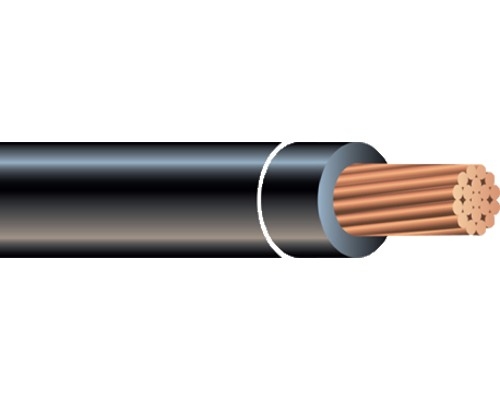
How do you read a THHN wire size and ampacity chart?
A THHN wire size chart usually lists conductor gauge next to allowable ampacity at different temperature columns. AWG numbering runs in reverse. A smaller number means a larger conductor. For example, 10 AWG exceeds 14 AWG in size. In the table above, the columns give reference copper conductor ampacities at 60°C, 75°C, and 90°C. The 90°C column does not set the circuit’s allowed current by default. Use the column that fits the code conditions and equipment limits. Then apply any needed correction or adjustment factors.| Copper conductor | 60°C column | 75°C column | 90°C column |
| 14 AWG | 15 A | 20 A | 25 A |
| 12 AWG | 20 A | 25 A | 30 A |
| 10 AWG | 30 A | 35 A | 40 A |
| 8 AWG | 40 A | 50 A | 55 A |
| 6 AWG | 55 A | 65 A | 75 A |
| 4 AWG | 70 A | 85 A | 95 A |
What THHN wire gauge carries the current your circuit needs?
First, work out the calculated load, system voltage, phase, and whether the load runs continuously. Next, note conductor material and the installation setting. The right THHN wire gauge is the smallest conductor that meets the needed ampacity after all required factors. It must also satisfy voltage-drop, short-circuit, mechanical, and terminal rules. A larger conductor may prove necessary on a long run even when the basic ampacity table looks adequate.How do copper and aluminum THHN wire sizes compare?
Same AWG copper conductors and aluminum conductors do not have identical ampacities. Check the table and the conductor information for the specific wire. Also, check to see if the lugs and other equipment can accept the specified conductor. The building-wire information for TD Cable’s soft-drawn copper THHN/THWN(-2) conductors with PVC insulation and a nylon jacket is provided for 600 V conductors of various configurations to change with the size of the conductor. Refer to product marking and data sheet for specific details on the offered construction.When should you move up to a larger THHN wire size?
It’s wise to upsize cables in situations where voltage drop is important, long runs are involved, high ambient temperatures exist, multiple current-carrying cables are sharing the same cable tray or raceway, and the calculated load allows for little extra margin. Voltage drop is a function of current, conductor resistance, length of the circuit, and the overall configuration of the electrical system. Do not confuse this with ampacity, as voltage drop must be calculated and is not to be approximated. In addition, be sure to select the circuit breaker or fuse to match the wire and load, again per the applicable codes.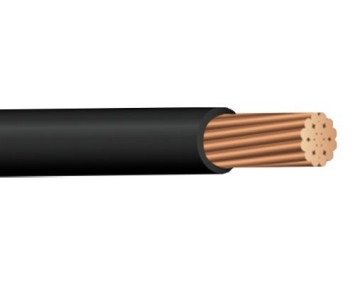
Which THHN wire temperature rating controls the ampacity?
There are different ratings for different locations. Most THHN is rated for 90°C in dry locations. Most THWN-2 is rated for 90°C in wet locations and dry locations. Most THWN is rated for 75°C in wet locations. There are many different markings on conductors, so make sure you read the entire marking on the product. TD Cable’s copper THHN/THWN(-2) building wire is 600 V PVC insulated with an overall nylon jacket. Refer to ASTM B3, B8, B787, and UL 83. This product information identifies the product’s construction, the governing listing for the product, and the intended installation set use.Although 90°C insulation may be the starting point for correction and adjustment of equipment terminations, the temperature of the termination can be limited by other factors such as the terminal equipment, conductor size, and the circuit rating. A 90°C marking on the insulation does not necessarily mean that the 90°C value will be in the appropriate chart column for all connections.
How do installation conditions change THHN wire ampacity?
Temperature and conductor grouping decrease the current capacity of a conductor. Temperature correction factors must be applied above the base temperature of the ampacity tables, and adjustment factors for the number of current-carrying conductors in raceways and cables, as required by adopted codes. Neutral conductors may or may not be counted depending on the specific circuit and load. Also verify that the cable is rated for use in wet locations. As described above, an underground raceway is considered to be a wet location under most electrical codes. A single THHN conductor would not be the appropriate selection for this type of application. A conductor that is rated as THHN/THWN-2 can be used in an approved raceway as part of an approved wiring method. Having a wet rating does not automatically mean that a cable can be used for direct burial.What should you verify before choosing THHN wire size?
A THHN wire size chart provides a useful starting point, but selecting the right conductor requires more than checking its ampacity. Before making a final decision, consider the following factors:- Electrical load: Determine the circuit’s load current, including continuous loads, and confirm the operating voltage and cable run length.
- Conductor material and ampacity: Identify the conductor material and select a suitable wire size using the applicable ampacity tables.
- Installation conditions: Apply the required ambient temperature correction and conductor-count adjustment factors.
- Electrical and installation requirements: Check terminal temperature ratings, overcurrent protection, voltage drop, conduit fill, and pulling conditions.
- Compliance and suitability: Verify the conductor markings, wet or dry location requirements, product listing, and applicable electrical codes.
At TD Cable, we understand that wire selection depends on the specific requirements of each project. When requesting a quotation or technical guidance, sharing details such as electrical load, conductor material, cable length, installation environment, conduit arrangement, and applicable code edition can help us recommend suitable building wire options.